

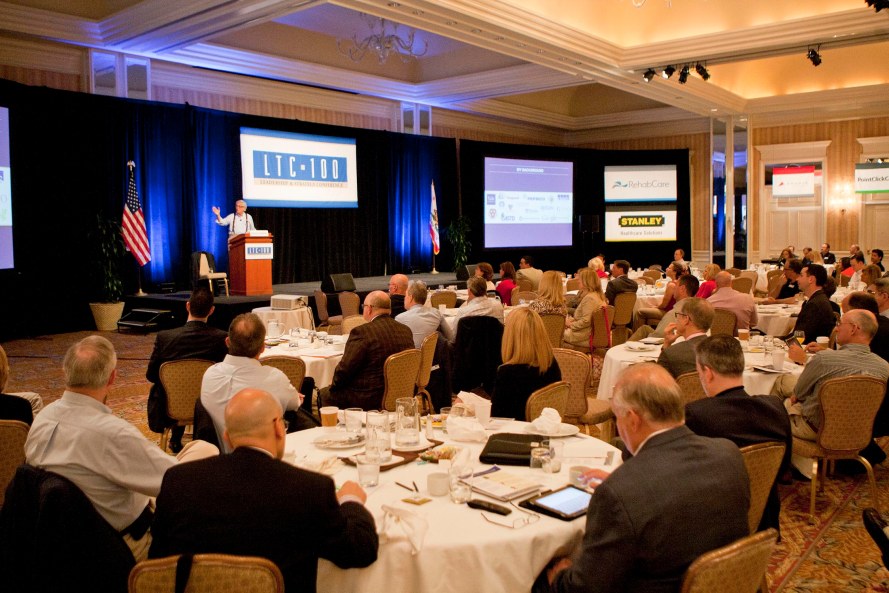
Leaving the LTC100, you could almost feel the ground starting to shake – and you can really feel it.
It is scary for most of us mere mortals who do not have a crystal ball to consider questions like: What is the real rate of change? How much risk can you tolerate? How does operational fatigue play into it all? And how do you get your team on the same page anymore while continuing to focus on core fundamentals that get harder daily, new mental modes required to assess the future, and the cultural implications on all of your stakeholders who just need to provide great care to the more complicated residents, 24/7?
Personally, I could see Anita M. McGahan’s framework of Industry Cycles of Change in many sidebar conversations, even if they did not know they were using it!
There are really too many conferences with spins on same themes, so many talking heads everywhere around us that could operate a lemonade stand, and the plethora of online healthcare futurist bloggers telling us we are all screwed in the end, that we should give up and go into medical tourism.
I ask myself often, ‘how many futurists can you trust without just giving up and throwing in your towel (or in my place, the keys), anyway?’
There seem to be only four distinct schools of thought circling around post-acute providers that I know intimately with no clear, absolute boundaries between them.
Heck, with leadership turnover at many shops, hospital C-suites changing rapidly, and REITs getting scared of future rent collectibility in many tired and dated centers, I always say just pick one that you believe in your heart and go with it.
The schools of thought I run into often…
Here, where we are at the Revolution today, we try to live School of Thought #2, but every time we stumble big time, we revert back to School of Thought #1. But School of Thought #4 will make all of the pain turn to joy someday if we can just see the mountaintop.
There are so many mixed signals from external forces that make it challenging to get everyone on the same page, so over-communicate if time permits and don’t ever give up because they all need us even if they act like they don’t. We are still the most inexpensive service that no one ever wants, but many really need like never before.