
For as long as we lead and serve, the pursuit of excellence for our customers and stakeholders remains paramount. The post COVID era created a challenge to determine what will continue to drive excellence.
Reflecting on my own journey, I believed financial models held all the answers. However, I soon realized and quickly learned that without a framework to operate them, they become just hypothetical. I love using regression, simulation, and dimensionality in financial analysis, but learned it all had limits as a leader unless you could apply it to a relevant framework.
Years ago, a dedicated group of professionals from our organization obtained a top healthcare MBA at the University of Miami. We were the largest group from one company ever to attend the program together. During our time in the program, we discovered the power of integrating academic research and practical learning into an organizational structure redesign. With this new insight, we worked together to redesign our organization.
For several years, we immersed ourselves in intensive weekend sessions, spanning three days each, exploring all the great business writers and researchers from Deming, Goldman, Senge, Christensen, Drucker, McKee, Fiedler, and you get the point! The University of Miami faculty was phenomenal to say the least!
In an intense operations class, we were presented with the famed Herzberg Two Factor Theory, and our perspective shifted dramatically. As leaders in the nursing home space, Herzberg’s insights struck a chord unlike anything else it and it became our holy grail. We read some case studies, and watched Herzberg deliver a lecture called "JUMPING for the JELLYBEANS”. I suggest watching that lecture; it's still hilarious to me as I rewatch it today.
Frederick Herzberg developed his Two-Factor Theory in the late 1950s based on his research on workplace motivation. He first introduced his ideas in a 1959 article titled "The Motivation to Work”, which was later expanded upon in his book of the same name, published in 1968. His theory, presented in his seminal work, offered a groundbreaking approach to workplace motivation by identifying and addressing both “hygiene” factors and “motivators” independently.
With 58 nursing homes at the time, our organization faced significant challenges, including financial strain and operational inefficiencies. At the time, 20% ofUS facilities were in bankruptcy or reorganizing due to inadequate government reimbursement, negative margins, misaligned resources and limiting capital structure.
Applying Herzberg’s Theory, we learned that separating the negative “hygienes” that were frustrating stakeholders allowed us to evaluate the motivators independently.This was a game changer as it allowed us to build strong motivation plansaround culture and performance. This process took time, but once we had a plan, our culture was one that could rival any company at the time. In the end, it's cheaper than you think to fix negative “hygienes,” especially when they become visible.
Fifteen years later, following painful lessons learned from growing too quickly, external interventions, and industry changes (that culminated with Covid), we're returning to utilizing Herzberg. It feels like rediscovering a familiar beacon of guidance!
We started by reintroducing Herzberg to building leaders and challenged them to implement this framework at their locations if appropriate. After identifying and addressing both “hygiene” factors and “motivators” independently, they began exploring new ways to improve their location’s culture and performance. The overwhelming response of submissions all showcased creative ways to improve workplace motivation and culture at their location.
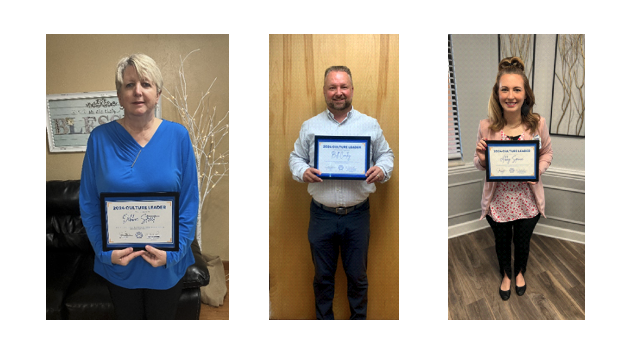
Among the standout submissions were those from Debbie Street and Bill Conley, stalwarts of our organization whose collective experience spanned over four decades. Their mastery of Herzberg's principles exemplified the enduring impact of a strong organizational culture. Equally inspiring was the contribution of Abby Spence, a rising star whose forward-thinking approach embodied the promise of our organization's future. See the pictures below of these outstanding influencers who truly share the power of the Herzberg framework!
If you find your organizational culture adrift, I urge you to consider Herzberg's framework. By meticulously addressing negative “hygiene” factors and cultivating a culture of motivation and excellence, you can reignite the magic within your organization. If you feel your culture is off – try Herzberg, it will recreate magic, I promise!